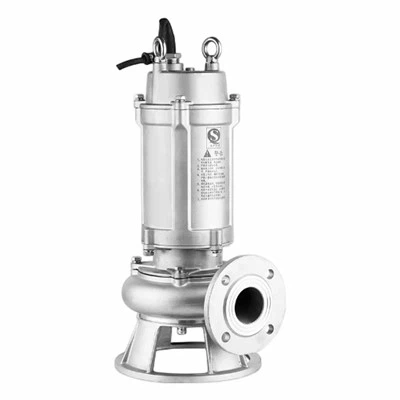
As a supplier of Sewage Pump Control Cabinets, I often get asked about the soft-start function and how it works. In this blog post, I'll delve into the details of the soft-start function in a Sewage Pump Control Cabinet, explaining its mechanism, benefits, and why it is a crucial feature for efficient sewage pumping systems.
Understanding the Soft-Start Function
The soft-start function in a Sewage Pump Control Cabinet is designed to gradually increase the voltage and current supplied to the sewage pump motor. Unlike a direct-on-line (DOL) start, where the motor is connected directly to the power supply and experiences a sudden surge of current, the soft-start method ramps up the power gradually. This controlled start-up process has several advantages that contribute to the overall performance and longevity of the sewage pump system.
How the Soft-Start Function Works
The soft-start function is typically implemented using a solid-state device, such as a thyristor or an insulated-gate bipolar transistor (IGBT). These devices are capable of controlling the amount of power delivered to the motor by adjusting the voltage and current levels. Here's a step-by-step breakdown of how the soft-start process works:
Step 1: Initialization
When the sewage pump is commanded to start, the soft-start controller initializes the process. It first checks the motor's parameters, such as its rated voltage, current, and power, to determine the appropriate starting profile.
Step 2: Voltage Ramp-Up
The soft-start controller gradually increases the voltage supplied to the motor over a pre-set period. This ramp-up time can be adjusted according to the specific requirements of the sewage pump system. By slowly increasing the voltage, the motor starts smoothly without experiencing a sudden jolt of power.
Step 3: Current Limitation
During the soft-start process, the controller also monitors the current flowing through the motor. It ensures that the current does not exceed a pre-defined limit, which helps to prevent overloading and damage to the motor. If the current exceeds the limit, the controller may adjust the voltage or take other corrective measures to maintain a safe operating condition.
Step 4: Full Speed Operation
Once the motor reaches its rated speed, the soft-start controller switches to normal operation mode. At this point, the motor is supplied with full voltage and operates at its normal speed.
Benefits of the Soft-Start Function
The soft-start function offers several benefits for sewage pump systems, including:
Reduced Mechanical Stress
By gradually ramping up the power, the soft-start function reduces the mechanical stress on the pump and its components. This helps to extend the lifespan of the pump and reduces the likelihood of premature failure.
Energy Savings
The soft-start function can also help to save energy by reducing the inrush current during start-up. Inrush current is the high current that flows through the motor when it is first started. By reducing the inrush current, the soft-start function reduces the overall energy consumption of the pump system.
Improved System Reliability
The soft-start function improves the reliability of the sewage pump system by reducing the risk of electrical and mechanical failures. By preventing sudden surges of power, the soft-start function helps to protect the motor and other components from damage.
Enhanced Pump Performance
The soft-start function can also improve the performance of the sewage pump by providing a smooth and controlled start-up. This helps to prevent cavitation and other issues that can affect the efficiency of the pump.
Applications of the Soft-Start Function
The soft-start function is widely used in sewage pump systems in various applications, including:
Municipal Sewage Treatment Plants
In municipal sewage treatment plants, the soft-start function is used to control the operation of sewage pumps. By providing a smooth and controlled start-up, the soft-start function helps to prevent damage to the pumps and other components, and ensures the efficient operation of the treatment plant.
Industrial Sewage Systems
In industrial sewage systems, the soft-start function is used to control the operation of sewage pumps in factories, refineries, and other industrial facilities. By reducing the mechanical stress on the pumps and other components, the soft-start function helps to extend the lifespan of the equipment and reduce maintenance costs.
Commercial Buildings
In commercial buildings, the soft-start function is used to control the operation of sewage pumps in basements, parking garages, and other areas where sewage needs to be pumped. By providing a smooth and controlled start-up, the soft-start function helps to prevent noise and vibration, and ensures the efficient operation of the building's sewage system.


Comparison with Other Starting Methods
The soft-start function is just one of several starting methods available for sewage pumps. Other common starting methods include direct-on-line (DOL) start, star-delta start, and auto-transformer start. Here's a comparison of the soft-start function with these other starting methods:
Direct-On-Line (DOL) Start
The DOL start is the simplest and most common starting method for sewage pumps. In a DOL start, the motor is connected directly to the power supply, and the full voltage is applied to the motor immediately. This method is suitable for small motors with low starting torque requirements. However, it can cause a large inrush current, which can damage the motor and other components.
Star-Delta Start
The star-delta start is a more complex starting method that is used for larger motors. In a star-delta start, the motor is initially connected in a star configuration, which reduces the voltage applied to the motor and the inrush current. After a pre-set period, the motor is switched to a delta configuration, which provides full voltage to the motor. This method is more efficient than the DOL start, but it requires additional equipment and wiring.
Auto-Transformer Start
The auto-transformer start is another starting method that is used for larger motors. In an auto-transformer start, an auto-transformer is used to reduce the voltage applied to the motor during start-up. This method is similar to the star-delta start, but it uses an auto-transformer instead of a star-delta switch. The auto-transformer start is more efficient than the DOL start, but it also requires additional equipment and wiring.
Conclusion
The soft-start function is a crucial feature for sewage pump systems. By providing a smooth and controlled start-up, the soft-start function helps to reduce mechanical stress, save energy, improve system reliability, and enhance pump performance. As a supplier of Sewage Pump Control Cabinets, we offer a range of products that incorporate the soft-start function to meet the specific needs of our customers.
If you're interested in learning more about our Sewage Pump Control Cabinets or other pump control solutions, such as Fire Pump Control Device and Water Pump Control Cabinet, please feel free to contact us. Our team of experts is available to answer your questions and provide you with the information you need to make an informed decision.
References
- "Pump Handbook" by Karassik, I. J., Messina, J. P., Cooper, P. W., & Heald, C. C.
- "Electrical Engineering Handbook" by Richard C. Dorf.
- "Control Systems Engineering" by Norman S. Nise.