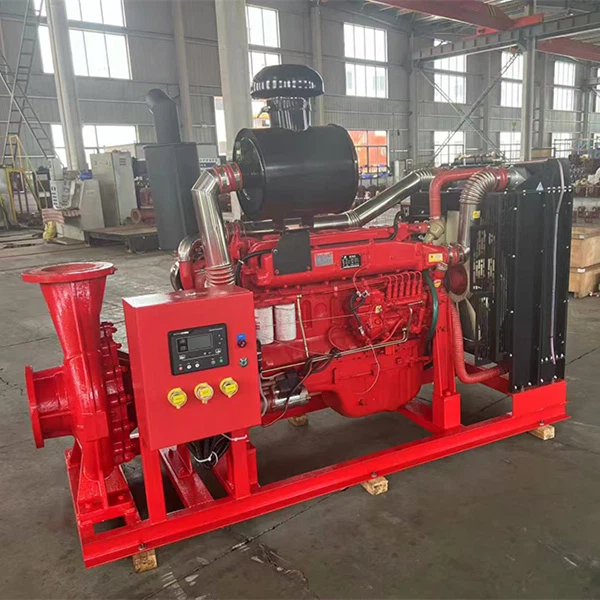
As a supplier of high-rise building booster pumps, I understand the critical role these pumps play in ensuring a reliable water supply in multi-story buildings. In a combined water supply system, evaluating the performance of a high-rise building booster pump is essential to guarantee efficient operation, meet water demand, and maintain the overall functionality of the building's water infrastructure. This blog post will delve into the key factors and methods for evaluating the performance of a high-rise building booster pump in a combined water supply system.
1. Flow Rate and Pressure Requirements
The first step in evaluating the performance of a high-rise building booster pump is to assess its ability to meet the flow rate and pressure requirements of the building. The flow rate is the volume of water that the pump can deliver per unit of time, usually measured in gallons per minute (GPM) or cubic meters per hour (m³/h). The pressure is the force exerted by the water, typically measured in pounds per square inch (PSI) or bar.
To determine the flow rate and pressure requirements, it is necessary to consider the number of floors in the building, the number of water outlets (such as faucets, showers, and toilets), and the peak water demand. For example, a high-rise building with a large number of residents or commercial tenants will require a higher flow rate and pressure to ensure adequate water supply to all floors.
Once the flow rate and pressure requirements are determined, the pump's performance can be evaluated by comparing its rated flow rate and pressure with the actual requirements. A pump that can deliver the required flow rate and pressure consistently is considered to be performing well.
2. Efficiency
Efficiency is another important factor in evaluating the performance of a high-rise building booster pump. A pump's efficiency is the ratio of the useful work output (water flow and pressure) to the energy input (electrical power). A more efficient pump will consume less energy to deliver the same amount of water, resulting in lower operating costs and reduced environmental impact.
There are several ways to measure a pump's efficiency, including the pump's specific speed, the efficiency curve, and the overall efficiency. The specific speed is a dimensionless number that relates the pump's flow rate, head, and rotational speed. The efficiency curve shows the relationship between the pump's efficiency and its flow rate. The overall efficiency is the product of the pump's hydraulic efficiency, mechanical efficiency, and motor efficiency.
To improve the efficiency of a high-rise building booster pump, it is important to select a pump with a high efficiency rating, operate the pump at its optimal flow rate and pressure, and maintain the pump regularly to ensure its proper functioning.
3. Reliability and Durability
Reliability and durability are crucial factors in evaluating the performance of a high-rise building booster pump. A reliable pump will operate continuously without breakdowns, ensuring a consistent water supply to the building. A durable pump will withstand the harsh operating conditions in a high-rise building, such as high pressure, high temperature, and corrosive water.
To ensure the reliability and durability of a high-rise building booster pump, it is important to select a pump from a reputable manufacturer, use high-quality materials in the pump's construction, and follow the manufacturer's recommended maintenance schedule. Regular maintenance, such as lubrication, inspection, and replacement of worn parts, can help prevent breakdowns and extend the pump's lifespan.
4. Noise and Vibration
Noise and vibration can be a significant issue in a high-rise building, especially if the booster pump is located near living or working areas. Excessive noise and vibration can cause discomfort to the building's occupants and may even damage the pump and other equipment.
To evaluate the performance of a high-rise building booster pump in terms of noise and vibration, it is important to measure the pump's noise level and vibration amplitude. The noise level is typically measured in decibels (dB), and the vibration amplitude is measured in millimeters (mm). A pump that operates quietly and with minimal vibration is considered to be performing well.
To reduce noise and vibration, it is important to select a pump with a low noise level and vibration amplitude, install the pump on a vibration isolation pad, and use flexible connectors to connect the pump to the piping system.
5. Control and Monitoring
Control and monitoring are essential for ensuring the efficient and reliable operation of a high-rise building booster pump. A pump with a sophisticated control system can adjust its flow rate and pressure automatically based on the water demand, ensuring that the pump operates at its optimal efficiency. A monitoring system can provide real-time information about the pump's performance, such as flow rate, pressure, temperature, and energy consumption, allowing for timely maintenance and troubleshooting.
To evaluate the performance of a high-rise building booster pump in terms of control and monitoring, it is important to assess the pump's control system and monitoring capabilities. A pump with a user-friendly control panel, remote monitoring capabilities, and alarm functions is considered to be performing well.
6. Compatibility with the Combined Water Supply System
In a combined water supply system, the high-rise building booster pump needs to be compatible with other components of the system, such as the water storage tank, the piping system, and the control valves. Compatibility issues can lead to reduced performance, increased energy consumption, and even system failures.


To evaluate the performance of a high-rise building booster pump in terms of compatibility with the combined water supply system, it is important to consider the pump's flow rate, pressure, and connection requirements. The pump should be able to deliver the required flow rate and pressure to all parts of the system, and it should be compatible with the piping system and the control valves.
7. Environmental Impact
In today's environmentally conscious world, it is important to consider the environmental impact of a high-rise building booster pump. A pump that consumes less energy, uses less water, and produces less waste is considered to be more environmentally friendly.
To evaluate the performance of a high-rise building booster pump in terms of environmental impact, it is important to consider the pump's energy efficiency, water consumption, and waste generation. A pump with a high energy efficiency rating, a low water consumption rate, and a minimal waste generation is considered to be performing well.
Conclusion
Evaluating the performance of a high-rise building booster pump in a combined water supply system is a complex process that requires considering multiple factors, such as flow rate, pressure, efficiency, reliability, durability, noise and vibration, control and monitoring, compatibility, and environmental impact. By carefully evaluating these factors, building owners and operators can select the right pump for their needs, ensure its efficient and reliable operation, and minimize its environmental impact.
If you are interested in learning more about our high-rise building booster pumps or have any questions about evaluating the performance of a pump in a combined water supply system, please feel free to [initiate a conversation with us to discuss your procurement needs]. We are committed to providing high-quality pumps and excellent customer service to meet your requirements.
References
- ASHRAE Handbook - HVAC Systems and Equipment
- Hydraulic Institute Standards
- Pump Handbook by Igor J. Karassik et al.