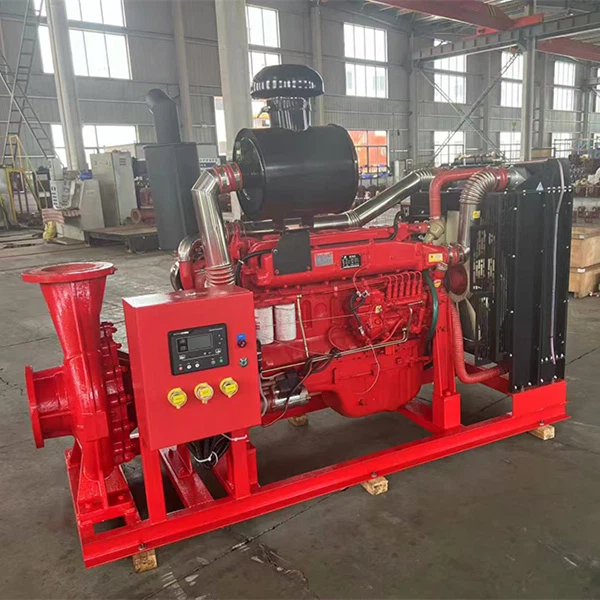
In the realm of fire protection, the horizontal multi - stage fire pump stands as a crucial piece of equipment. As a supplier of multi - stage fire pumps, I am well - versed in the characteristics that make these pumps indispensable for safeguarding lives and property. This blog aims to delve into the key features of horizontal multi - stage fire pumps, comparing them with other types of fire pumps when necessary.
High - Pressure Generation
One of the most prominent characteristics of a horizontal multi - stage fire pump is its ability to generate high pressures. In a multi - stage pump, the impellers are arranged in series. As the water passes through each impeller, additional energy is imparted to it, gradually increasing the pressure. This is particularly important in fire - fighting scenarios where water needs to be delivered to great heights or over long distances. For instance, in high - rise buildings, a single - stage pump may not be sufficient to provide the required pressure to reach the upper floors. The horizontal multi - stage fire pump, with its sequential impeller design, can easily overcome such challenges and ensure that water is delivered with the necessary force to extinguish fires effectively.
In contrast, a Single Stage Fire Pump has only one impeller. While it is simpler in design and may be suitable for low - pressure applications, it cannot achieve the same high pressures as a multi - stage pump. This limitation makes it less suitable for large - scale fire - fighting operations in tall buildings or industrial complexes.
Efficiency and Performance
Horizontal multi - stage fire pumps are known for their high efficiency. The design of the impellers and the flow path within the pump is optimized to minimize energy losses. The water flow is smooth and well - regulated, which allows the pump to convert a large proportion of the input energy into useful hydraulic energy. This not only reduces operating costs but also ensures reliable performance over long periods.
Efficiency is also related to the pump's ability to maintain a stable flow rate. In a fire - fighting situation, a consistent water supply is essential. Horizontal multi - stage fire pumps are engineered to provide a steady flow of water, regardless of the changes in pressure or demand. This reliability is crucial for firefighters, as they need to be confident that the water supply will not falter during an emergency.
Compact Design
The horizontal design of these pumps offers several advantages in terms of space utilization. Horizontal multi - stage fire pumps are generally more compact compared to some other types of pumps, such as vertical pumps. This makes them easier to install in limited spaces, such as mechanical rooms in buildings or small fire - station facilities.
The compact design also simplifies maintenance. Access to the various components of the pump, such as the impellers, bearings, and seals, is relatively easy. This means that maintenance tasks can be carried out more quickly and efficiently, reducing downtime and ensuring that the pump is always ready for use.
Durability and Reliability
Fire pumps need to be durable and reliable, as they may remain idle for long periods but must be ready to operate at a moment's notice. Horizontal multi - stage fire pumps are built to withstand harsh conditions. The materials used in their construction, such as high - grade stainless steel or cast iron, are resistant to corrosion and wear.
The design of the pump also takes into account the need for long - term reliability. The bearings are designed to have a long service life, and the seals are engineered to prevent leakage. Additionally, the pump is often equipped with safety features, such as over - pressure protection and temperature sensors, to ensure that it operates safely and efficiently.
Versatility
Horizontal multi - stage fire pumps are highly versatile and can be used in a wide range of applications. They can be used in commercial buildings, industrial facilities, residential complexes, and even in outdoor fire - fighting systems. They can handle different types of water sources, including municipal water supplies, lakes, and reservoirs.
This versatility is further enhanced by the ability to customize the pump according to specific requirements. For example, the number of stages can be adjusted to achieve the desired pressure and flow rate. Different impeller sizes and materials can also be selected based on the application.
Comparison with Other Fire Pumps
Let's compare horizontal multi - stage fire pumps with Submersible Fire Pump and Diesel Powered Fire Pump.
Submersible fire pumps are designed to be submerged in water. While they are suitable for applications where the water source is below the pump level, they may not be as efficient in generating high pressures as horizontal multi - stage fire pumps. Submersible pumps are also more difficult to maintain, as they are located underwater.
Diesel - powered fire pumps, on the other hand, offer the advantage of being independent of the electrical grid. They are often used in remote locations or in situations where a reliable power supply is not available. However, they require regular maintenance of the diesel engine, and the fuel storage and handling can be a safety concern. Horizontal multi - stage fire pumps, which are usually electrically powered, are more convenient for most urban and suburban applications, where a stable power supply is available.


Conclusion
In conclusion, the horizontal multi - stage fire pump is a remarkable piece of equipment with a host of characteristics that make it an ideal choice for fire - fighting applications. Its high - pressure generation, efficiency, compact design, durability, reliability, and versatility set it apart from other types of fire pumps.
If you are in the market for a reliable fire - pump solution, I encourage you to consider our horizontal multi - stage fire pumps. Our team of experts can help you select the right pump for your specific needs and provide you with comprehensive after - sales support. Whether you are a building owner, a facility manager, or a fire - protection professional, we are here to assist you in ensuring the safety of your property and the people within it. Contact us today to start a discussion about your fire - pump requirements.
References
- "Fire Pump Handbook" by the National Fire Protection Association.
- "Pump Engineering" by Karassik, Messina, Cooper, and Heald.
- Industry reports on fire - pump technology and applications.